
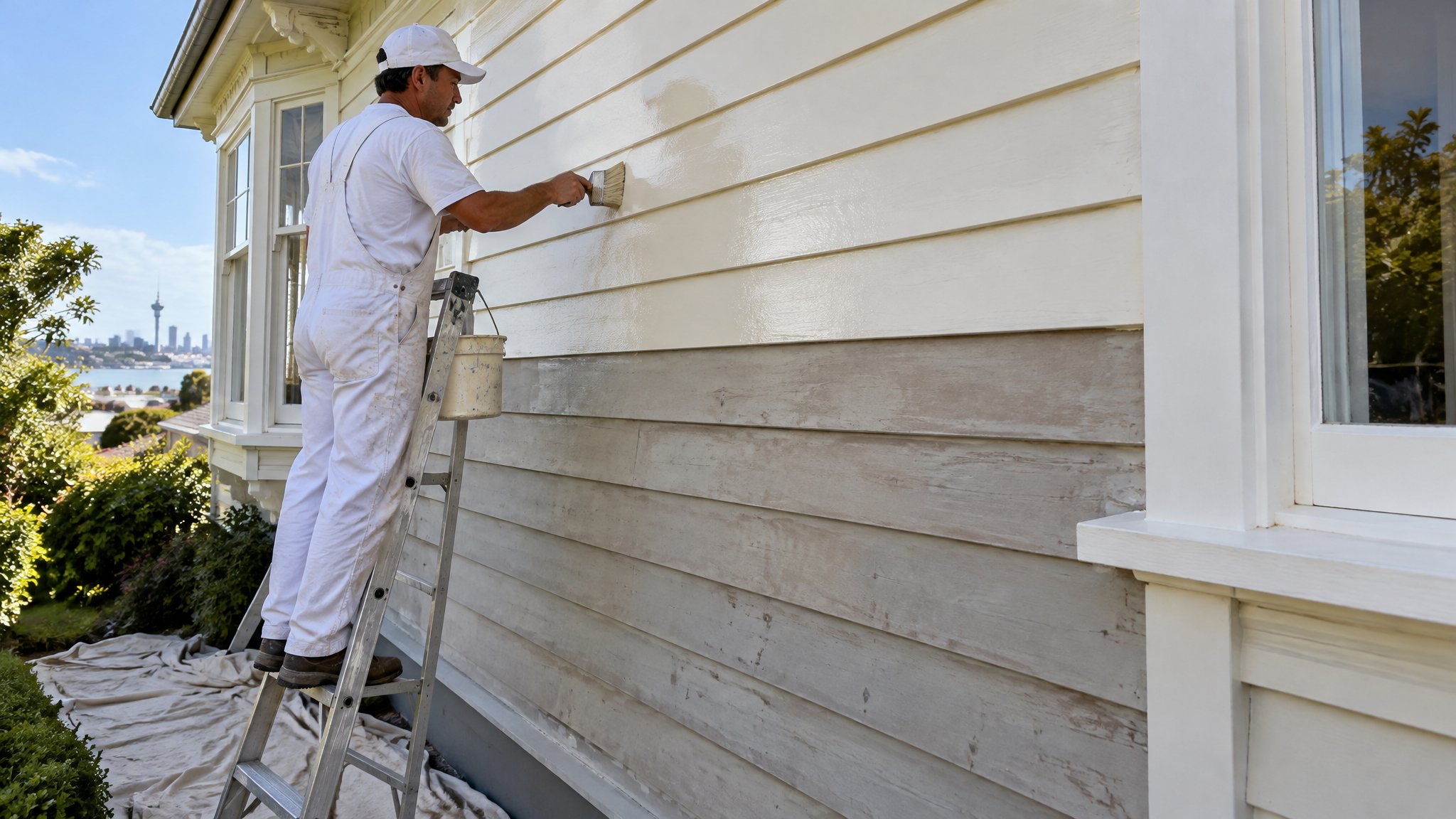
White paint is never just white. Some whites feel soft and creamy, while others look crisp and bright. The difference usually comes down to undertones, light, and the way the colour sits in your home.
If you're choosing paint for an Auckland house, understanding warm white versus cool white can save a lot of guesswork. The right white can make a room feel calmer, brighter, more spacious, or more inviting.
Warm white paint: soft, creamy and inviting
Warm white paint has yellow, red, or beige undertones. It usually feels softer than a cool white and can make a room look cosy and relaxed. In many homes, warm whites work well where you want a welcoming feel rather than a sharp, modern one.
Warm whites are often a good choice for living rooms, bedrooms, and older homes with character features. They can also help balance out cool natural light, which is common in some Auckland rooms that don't get much direct sun.
- Often looks creamier or slightly off-white
- Can suit traditional, villa, and character homes
- Feels warmer in north-facing or shaded rooms
- Works well with timber floors and natural textures
Cool white paint: crisp, clean and fresh
Cool white paint has blue, grey, or sometimes green undertones. It tends to look cleaner and more modern, which is why it is often used in newer homes, bathrooms, kitchens, and spaces where a fresh finish is wanted.
Cool whites can make a room feel bright and airy, especially if the space gets a lot of light. But in a room with limited sunlight, a cool white may feel a bit stark or even slightly cold if the undertones are too strong.
- Often looks sharper and brighter
- Can suit modern interiors and minimalist styles
- Works well with black fixtures, stone, and polished surfaces
- Can feel icy in shaded rooms if not chosen carefully
How to choose the right white for your Auckland home
The best white depends on your light, your furnishings, and the mood you want. A white that looks beautiful in a sunny Remuera lounge may look completely different in a north-west facing Ponsonby apartment or a dim hallway in Devonport.
A few practical things to think about are the direction of the room, whether you want the space to feel warm or crisp, and what other finishes are already in the home. Skirting boards, ceilings, joinery, kitchen cabinetry, and flooring all affect how a white reads on the wall.
- Test large sample patches on different walls
- Look at the paint in morning, afternoon, and evening light
- Compare the white against flooring, trims, and window frames
- Choose the same white for adjoining spaces if you want flow
When to call Steve
If you are unsure whether warm white or cool white will suit your home, it is worth getting proper advice before you commit to a full repaint. Steve is a Kiwi and a trade-qualified painter, and he can help you choose a white that works with your light, layout, and existing finishes.
He can also spot undertones that are hard to see on a paint chip and advise on the right sheen level and product for each room. For a result that looks right in real life, not just on a sample card, contact Steve, a Kiwi and a trade-qualified painter, for friendly, practical guidance.
Frequently Asked Questions
Is warm white better than cool white for most homes?
Not always. Warm white often feels softer and more inviting, but cool white can look better in modern spaces or rooms with strong natural light. The best choice depends on your home and the look you want.
Why does the same white paint look different in each room?
Light, shadow, surrounding colours, and even floor coverings can change how white paint looks. A white with warm undertones may appear creamy in one room and plain white in another.
Can I mix warm white and cool white in the same house?
Yes, but it needs care. Some homes use one white for walls and a slightly different white for trims or ceilings. A painter can help make sure the combination still feels balanced and intentional.
Need a hand with your project?
Happy to tackle some of it yourself? Great — but for anything you’d rather leave to a professional, Steve Lunjevich is a Kiwi and a trade-qualified painter with 20+ years’ experience. Call or email for honest advice or a free, no-obligation quote.