
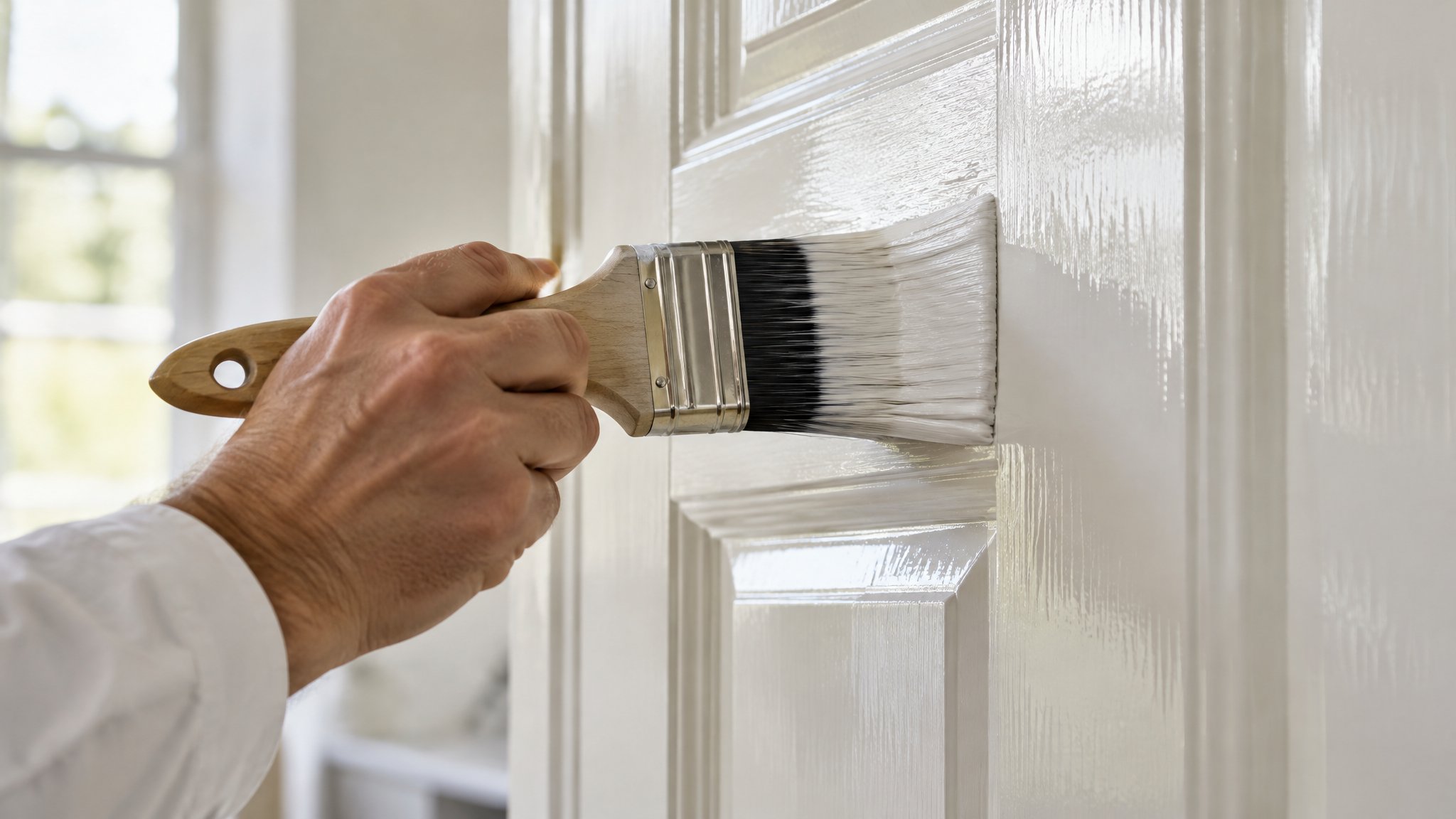
If you are repainting the outside of your home, the choice between acrylic and enamel matters more than many people realise. In Auckland’s changeable weather, the right product can make the difference between a coating that looks smart for years and one that starts to fail too soon.
Both paint types have their place, but they perform differently. For exterior work, the right choice depends on the surface, exposure, and the finish you want.
Acrylic paint: flexible and popular for most exterior surfaces
Acrylic paint is water-based and remains slightly flexible after it dries. That flexibility is useful on exterior surfaces that expand and contract with heat, moisture, and seasonal changes. It is widely used on weatherboards, fascia boards, soffits, concrete, and many other exterior areas.
One of the biggest advantages of acrylic is its breathability. It allows some moisture to escape from the coating system, which can help reduce blistering and peeling when surfaces are properly prepared. It also tends to be easier to apply, clean up, and maintain than enamel.
- Good flexibility for changing weather conditions
- Generally lower odour and easier clean-up
- Suitable for many timber and masonry surfaces
- Available in a wide range of exterior finishes
Enamel paint: harder finish for trim and high-wear areas
Enamel paint is known for drying to a harder, more durable finish. For exterior use, it is often chosen for doors, window frames, handrails, and other trim where a tougher coating is helpful. It can give a smoother, more refined look, which suits character homes and detailed joinery.
The trade-off is that enamel is usually less flexible than acrylic. On surfaces that move a lot, that hardness can become a drawback over time. If timber expands and contracts, a rigid coating may be more likely to crack or fail if the prep work or product choice is not right.
Modern waterborne enamels are commonly used outdoors because they combine some of the toughness of enamel with easier application and lower odour than traditional solvent-based products.
Which is better for exterior use in Auckland?
There is no single winner for every job. In Auckland, acrylic is often the better all-round choice for broad exterior areas such as weatherboards, rendered walls, and fences because it copes well with movement and changing conditions. Enamel is often better reserved for detailed trim where a harder finish is desirable.
As a simple guide:
- Use acrylic for most exterior wall and board surfaces
- Use enamel for doors, frames, skirtings, and high-contact trim
- Choose the product based on the surface, not just the look
- On coastal homes, preparation and primer choice are just as important as the topcoat
When to call Steve
If you are unsure whether acrylic or enamel is best for your exterior, it pays to get advice before you start. The wrong product on the wrong surface can lead to premature wear, extra maintenance, and a finish that does not suit the style of the home.
For Auckland homeowners and property managers, Steve is a Kiwi and a trade-qualified painter who can assess the surface, exposure, and existing coating, then recommend the most suitable system for lasting results. He can also help you choose the right primer, topcoat, and finish for weatherboards, trim, doors, and more.
Frequently Asked Questions
Can I use acrylic paint on exterior timber?
Yes, acrylic is commonly used on exterior timber, especially weatherboards and fascias. Good preparation and the right primer are important for a durable result.
Is enamel paint better for exterior doors?
Often, yes. Enamel can give exterior doors a harder, smoother finish that stands up well to handling and frequent use.
Which paint is better for coastal homes in NZ?
It depends on the surface, but acrylic is often used for larger exterior areas because it is more flexible. On coastal homes, preparation, primers, and product selection matter just as much as the topcoat.
Need a hand with your project?
Happy to tackle some of it yourself? Great — but for anything you’d rather leave to a professional, Steve Lunjevich is a Kiwi and a trade-qualified painter with 20+ years’ experience. Call or email for honest advice or a free, no-obligation quote.