When you hire a painter for your home, insurance is just as important as a tidy finish. If something is damaged, someone is injured, or a job goes wrong, the right cover can save a lot of stress.
For Auckland homeowners, especially in higher-value homes and tightly managed properties, it is worth knowing exactly what insurance a painter should carry before the first drop sheet goes down.
The main insurance a painter should have
The most important policy is public liability insurance. This helps cover accidental damage to your property or injury to other people caused by the painting work. For example, if paint spills on a hardwood floor, a ladder damages a window, or a visitor is injured because of the work area, public liability insurance is the first thing to check.
A professional painter should also have cover for their own tools and equipment. That does not protect your home directly, but it shows they are running a proper business and can keep working if tools are stolen or damaged.
In some cases, a painter may also carry employer-related cover if they have staff or subcontractors. If they are working on larger homes or more complex jobs, it is sensible to ask how their team is covered.
- Public liability insurance
- Tools and equipment cover
- Employer-related cover if they have staff
- Motor vehicle cover for work vehicles, where relevant
Why insurance matters on your property
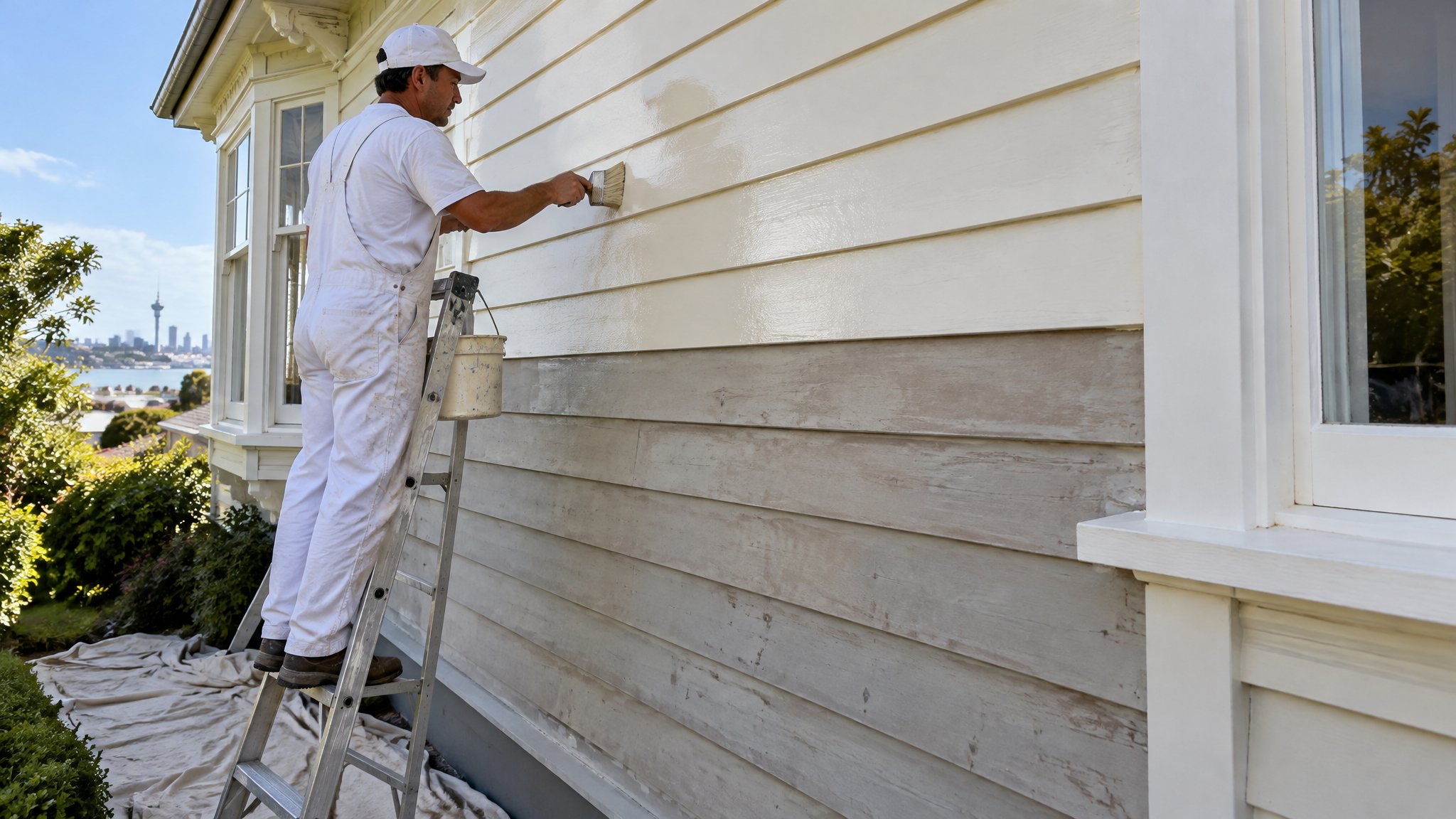
Painting can seem low-risk, but there are plenty of ways damage can happen. Wet paint can transfer to carpets or joinery, masking tape can lift delicate finishes, and ladders or scissor lifts can mark floors, paths or landscaping. If the painter is working near neighbours, shared driveways or apartment areas, the risk can be even greater.
Insurance is also a sign that the painter takes their business seriously. A properly insured painter is usually more organised about site setup, protection, access and safety. That matters whether the job is a full exterior repaint in Mission Bay or detailed interior work in Parnell or Remuera.
For homeowners and property managers, the goal is not to expect problems. It is to know that if an accident happens, there is a clear process to handle it.
What to ask before you hire a painter
Before work starts, ask for proof of insurance and check that the policy is current. You do not need to understand every line of the document, but you should confirm the cover is in the painter’s business name and is appropriate for the type of work being done.
It is also sensible to ask how they protect floors, furniture, gardens, windows and neighbouring property. Good insurance is important, but good preparation reduces the chance of needing to use it.
If the painter is working on a premium home, heritage property, or a detailed repaint where the finishes are delicate, ask whether they have experience with that type of work and whether they use the right methods and materials.
- Is your public liability insurance current?
- Can you show proof of cover?
- Do you have insurance for tools and equipment?
- How do you protect floors, furniture and landscaping?
- Have you done similar homes or projects before?
When to call Steve
If you are unsure what insurance to expect from a painter, or you want advice before appointing someone for your home, call Steve. He is a Kiwi and a trade-qualified painter, and he can talk you through what sensible cover looks like for your job, whether it is interior, exterior, or a more detailed premium repaint.
Steve can also help you understand the practical side of a safe, well-managed painting project, from site protection to finish quality. If you want peace of mind before work begins, speaking with Steve is a good place to start.
Frequently Asked Questions
Is public liability insurance enough for a painter?
Public liability is the main one to ask for, but it is not the only useful cover. A well-run painter may also have tools and equipment cover, and other business insurance depending on the size of the team and type of work.
Can I ask my painter for proof of insurance?
Yes. It is completely reasonable to ask for current proof of insurance before work starts. A professional painter should be willing to provide it without hesitation.
What if a painter is not insured?
If a painter is not insured, you may be left exposed if there is damage or injury connected with the job. In most cases, it is safer to choose an insured contractor who is clear about their cover and their process.
Need a hand with your project?
Happy to tackle some of it yourself? Great — but for anything you’d rather leave to a professional, Steve Lunjevich is a Kiwi and a trade-qualified painter with 20+ years’ experience. Call or email for honest advice or a free, no-obligation quote.