
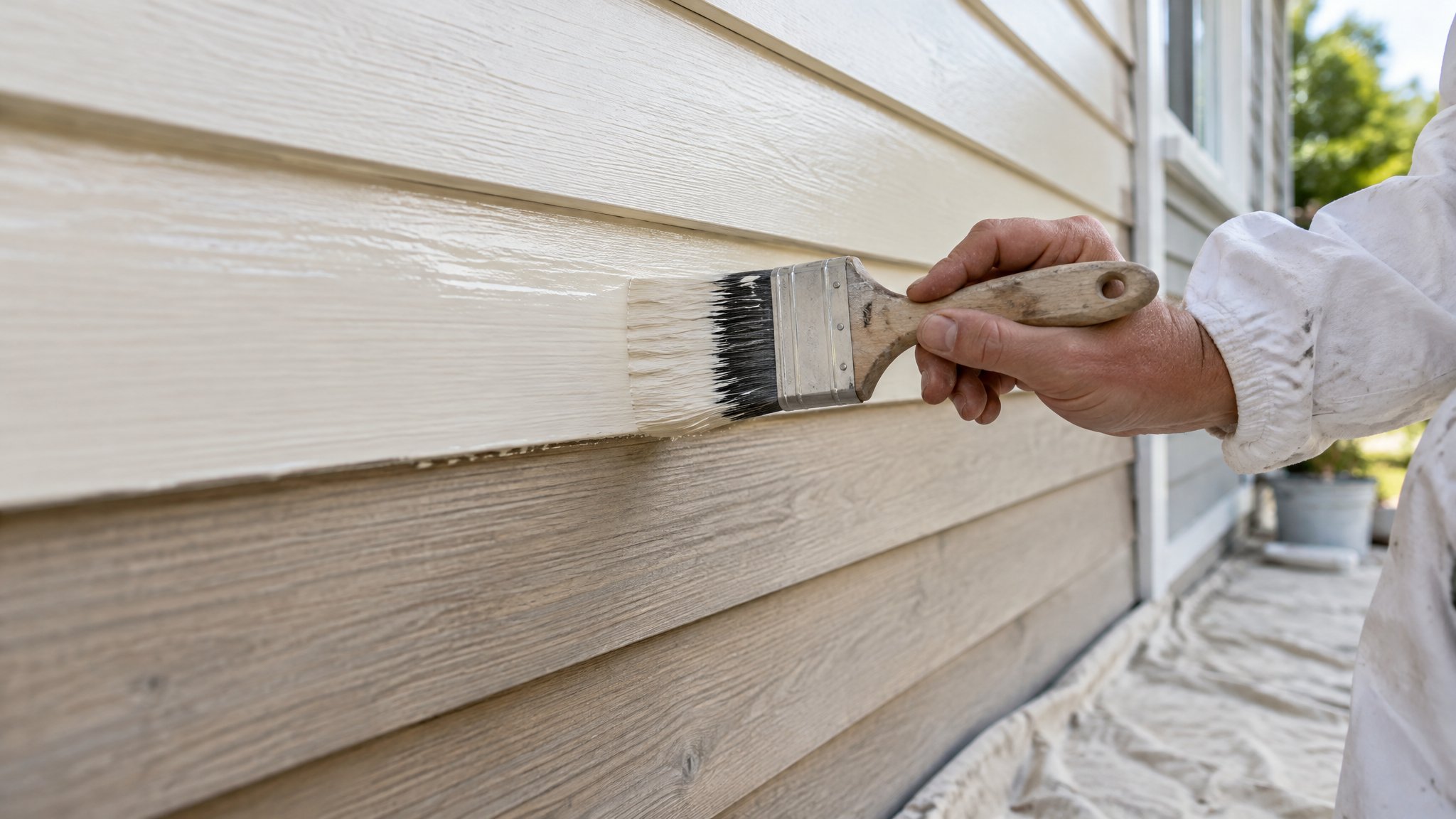
A blotchy stain finish on floorboards is usually a sign that the timber has absorbed colour unevenly. It can happen on older floors, new timber, or boards that looked fine before the stain went on.
The good news is that most uneven staining problems come down to a handful of common causes, and many can be prevented with the right preparation and product choice.
Uneven timber absorption
The most common reason for blotchy colour is that different parts of the floorboards soak up stain at different rates. Timber is a natural material, so even boards of the same species can behave differently depending on grain direction, density, age, and previous wear.
Soft earlywood in the grain can take up more stain than the harder latewood, which creates a striped or patchy look. End grain also absorbs far more stain than the face of the board, so places with exposed ends, joins, or repairs can appear darker.
Older floorboards can be especially unpredictable. Areas that have been walked on, scrubbed, sanded unevenly, or exposed to sunlight may stain differently from the rest of the room.
Poor sanding and surface preparation
If the floor has not been sanded evenly, the stain will not penetrate consistently. Coarse sanding marks, swirl marks, or patches that were over-sanded can all affect the final colour. A floor that still has old coating in low spots may also reject stain in places.
Dust, grit, filler, and residue from cleaners can interfere with stain absorption too. Even a thin film of contamination can make one board accept colour differently from the next.
Common preparation issues include:
• sanding in the wrong sequence or leaving inconsistent scratch patterns
• not removing old varnish or coating fully from the timber
• using filler that stains differently from the surrounding wood
• failing to vacuum and wipe the floor thoroughly before staining
Stain application problems and timber condition
Application technique has a big effect on how even the colour looks. If stain is left sitting too long in one area before it is wiped off, that patch will usually go darker. The same can happen if the stain is applied too sparingly in one section and heavily in another.
Temperature, humidity, and timber moisture content also matter. In Auckland, weather changes can affect how quickly stain dries and how evenly it flows into the boards. Timber that is still holding too much moisture can produce a patchy finish or make the grain raise unevenly.
Other causes of uneven colour include:
• applying stain to timber with mixed species or mixed age boards
• not stirring the stain properly before and during use
• applying stain over floorboards with natural tannins or resin pockets
• using the wrong stain system for the timber species
When to call Steve
If your floorboards have come up blotchy, it is worth getting advice before trying to fix them with another coat. Sometimes the issue can be corrected with sanding and restaining, but in other cases the whole system needs to be assessed so the next finish is even and durable.
Steve is a Kiwi and a trade-qualified painter, and he can help work out whether the problem is with the timber, the preparation, the stain choice, or the application. For Auckland homes, especially where the floorboards are old, mixed, or previously coated, a proper on-site assessment can save a lot of time and disappointment.
Frequently Asked Questions
Can blotchy stain on floorboards be fixed?
Often, yes. The usual fix is to sand back the affected area and restain with better preparation and a more suitable product, but the right approach depends on the timber and existing finish.
Why do some boards look darker than others after staining?
Different boards absorb stain at different rates because of grain, density, moisture, repairs, old wear, or leftover coating. End grain and soft grain areas often take more colour.
Should I stain floorboards straight after sanding?
Only once the floor is fully clean, dry, and evenly sanded. Any dust, residue, or moisture variation can affect how the stain takes and make the finish look patchy.
Need a hand with your project?
Happy to tackle some of it yourself? Great — but for anything you’d rather leave to a professional, Steve Lunjevich is a Kiwi and a trade-qualified painter with 20+ years’ experience. Call or email for honest advice or a free, no-obligation quote.