
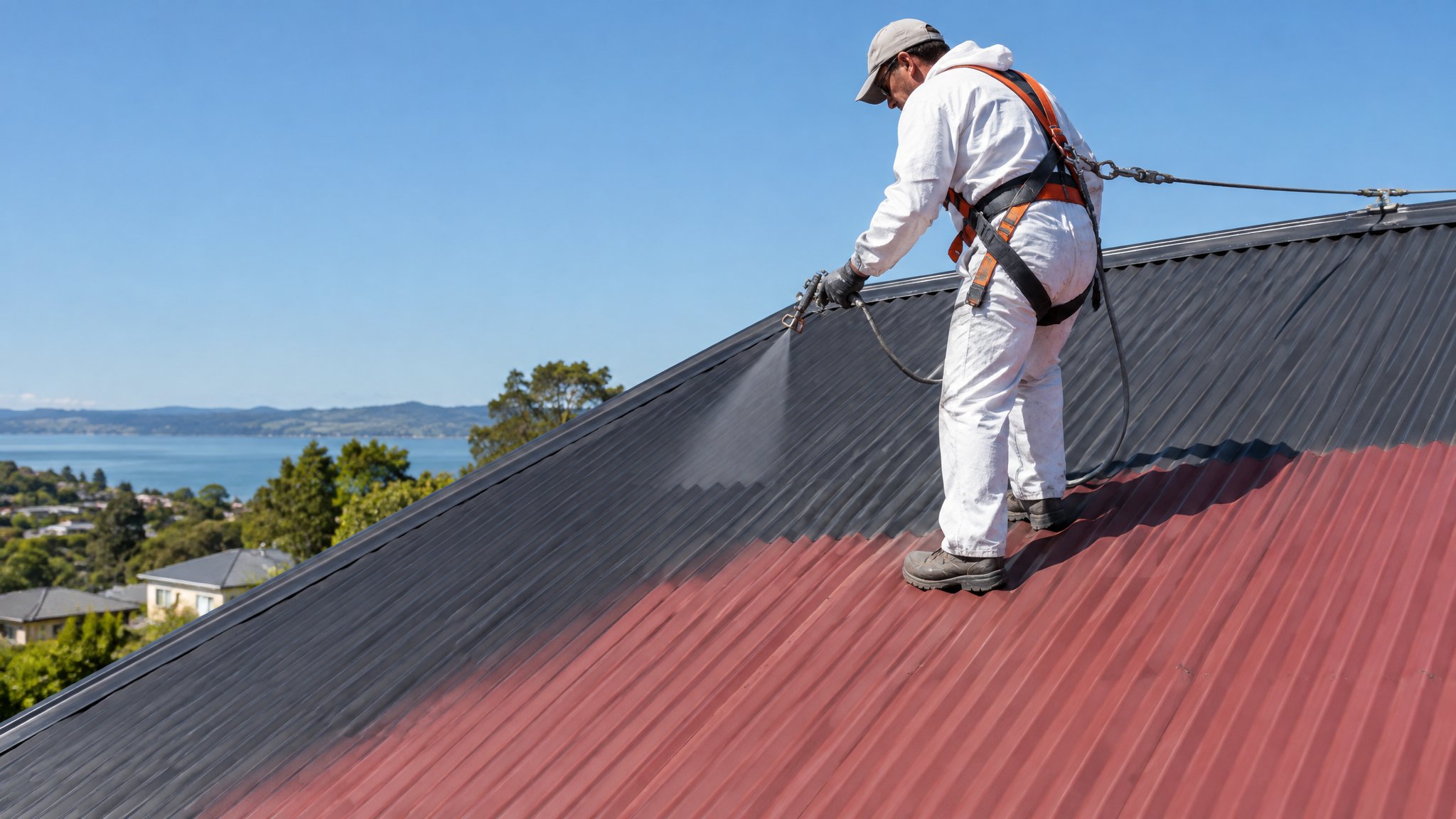
If you’re organising roof painting, the biggest thing to sort before the crew arrives is access. A good setup helps the job run safely, keeps the site tidy, and avoids delays once the paint system is underway.
In Auckland suburbs where homes can be tight to the boundary, have steep driveways, or sit close to neighbouring properties, a little planning goes a long way. Here’s what to arrange before the roof painter turns up.
1. Make space around the house and roofline
The painter will need clear access around the outside of the home to set up ladders, safety gear, wash equipment, and painting tools. If possible, move vehicles away from the house and keep the driveway clear for the day, especially if the crew needs to park close to the front or side access.
Around the roofline, try to leave a clear path by trimming back plants that may block access, brushing aside garden furniture, and removing anything that could get in the way of ladders or hose lines. If there are delicate garden beds, tell the painter in advance so they can protect them properly.
For homes with narrow side passages, decks, or limited boundary access, make sure gates are unlocked and easy to open. If access is usually through a garage or side door, let the painter know beforehand so the route can be planned.
- Move cars, trailers, and rubbish bins away from the house
- Unlock side gates and ensure access paths are clear
- Trim back overhanging plants if they block safe access
- Remove outdoor furniture, pots, and loose items near work areas
2. Plan for water, power, and neighbour access
Roof painting often involves washing, masking, and sometimes the use of power tools or pumps, so the crew may need access to water and electricity. Check that outdoor taps work and that an exterior power point is available if required. If there’s a locked meter box, shed, or service area, make sure the painter can get to it.
If the roof edge sits close to a neighbour’s property, access arrangements may need a quick conversation in advance. This can be especially important where ladders, scaffolding, or overspray protection might briefly affect the neighbouring side of the boundary. A polite heads-up usually makes things much easier.
For shared driveways, apartment-style access, or homes with restricted parking, organise any permits or approvals before the start date. That helps the painter arrive ready to work instead of spending time sorting access on site.
3. Protect pets, children, and belongings inside and out
Although most roof painting work happens outside, access planning should also include the people and pets in the home. Keep dogs and cats inside or securely contained, and let the painter know if there are animals on the property so they can take extra care with gates and open doors.
If windows may need to stay closed during the work, plan ahead for ventilation and make sure blinds, curtains, or breakables near access points are moved out of the way. It also helps to clear items from attic entries, roof hatches, or loft spaces if the painter needs to check inside roof access points.
For property managers, it’s worth notifying tenants about dates, parking changes, and any areas they should avoid. Clear communication prevents interruptions and keeps the site safer for everyone.
When to call Steve
If you’re unsure what access your particular roof will need, it’s best to talk it through before the job starts. Roof access can vary a lot between villas, villas with rear additions, modern homes, and properties on sloping sections across Auckland.
Steve is a Kiwi and a trade-qualified painter, and he can advise what needs clearing, whether scaffold or ladder access is suitable, and how to prepare your home for a smooth start. A quick chat beforehand can save time, reduce disruption, and make sure the roof painting runs safely from day one.
Frequently Asked Questions
Do I need to be home when the roof painter arrives?
Not always, but it helps if someone is available at the start to open gates, confirm access points, and answer any last-minute questions about the property.
Should I move my car before roof painting starts?
Yes, it’s best to move vehicles away from the house and driveway if possible. That gives the painter space for access, equipment, and safe movement around the property.
What if my property has difficult access?
Tell the painter as early as possible. Steep driveways, narrow side access, and boundary restrictions can usually be managed with the right plan, but they need to be known before the job begins.
Need a hand with your project?
Happy to tackle some of it yourself? Great — but for anything you’d rather leave to a professional, Steve Lunjevich is a Kiwi and a trade-qualified painter with 20+ years’ experience. Call or email for honest advice or a free, no-obligation quote.