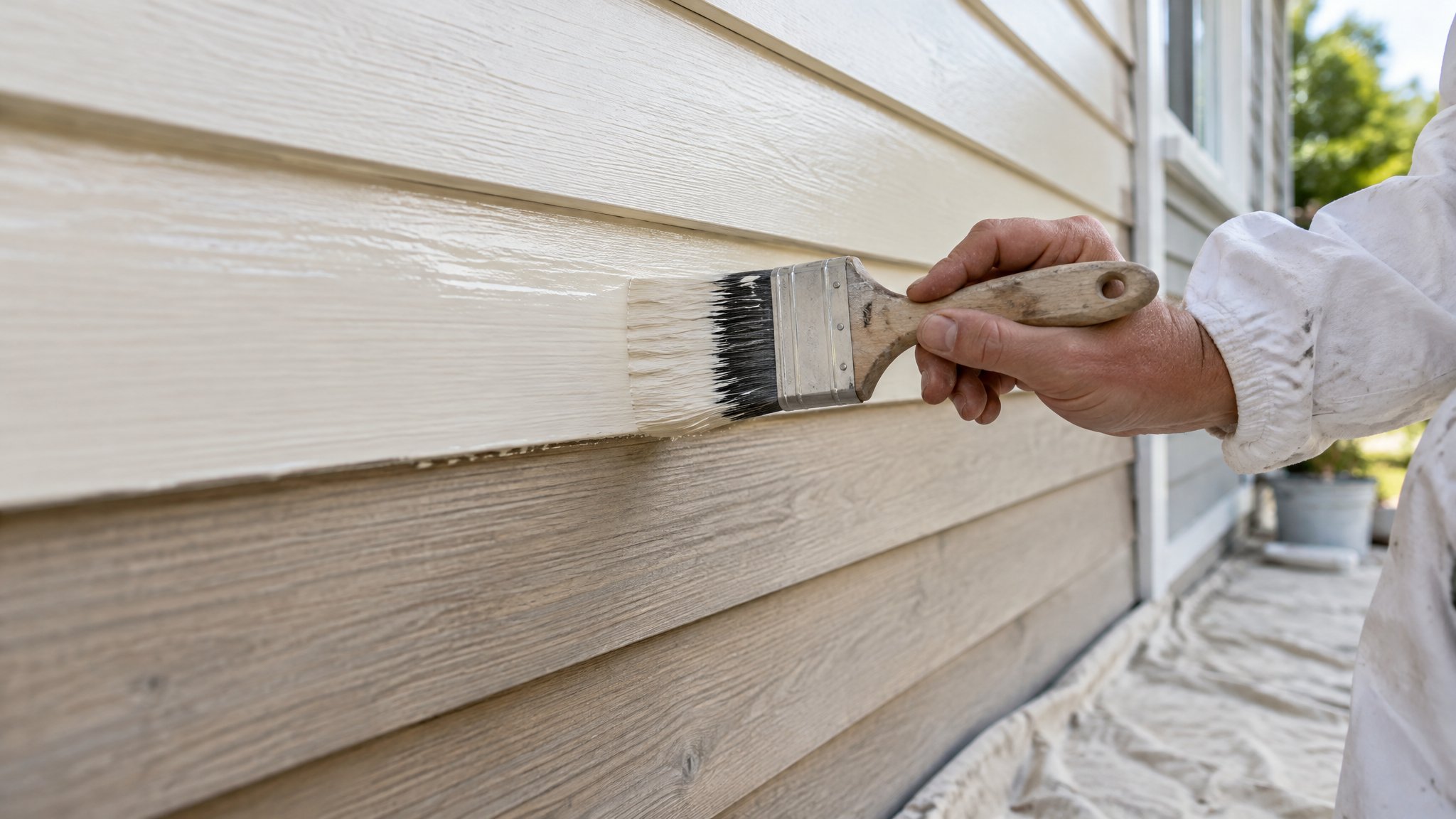
Plaster and fibre-cement cladding are everywhere on modern New Zealand homes — from Linea-style weatherboards to solid plaster and monolithic systems. They last well, but they need a different approach to painting than traditional timber.
How it differs from timber
Fibre-cement and plaster are more stable than timber — they expand and contract less — so coatings can last longer. But the surfaces, joints and any cracks need the right preparation and flexible, breathable systems to perform.
The preparation that matters
- Thorough washing and mould treatment, as with any exterior.
- Checking and repairing cracks, joints and any failed sealant — critical on plaster to keep water out.
- The correct primer/sealer for the substrate and its condition.
- A quality, flexible exterior system suited to plaster or fibre-cement.
Why specialist knowledge pays off
Cracks and failed joints on plaster homes are not just cosmetic — they can let water into the structure. Getting the repair and coating right protects the home, not just its looks. Steve, a Kiwi and trade-qualified painter, knows how to prep and coat these systems properly.
Frequently Asked Questions
Can you paint over hairline cracks in plaster?
Fine cracks can be filled and sealed with the right flexible products before painting. Larger or recurring cracks should be investigated — Steve will advise what’s needed.
How often does plaster cladding need repainting?
Often longer than timber — commonly 10–15 years — but regular washing and prompt crack repair extend that and protect the home.
Need a hand with your project?
Happy to tackle some of it yourself? Great — but for anything you’d rather leave to a professional, Steve Lunjevich is a Kiwi and a trade-qualified painter with 20+ years’ experience. Call or email for honest advice or a free, no-obligation quote.