
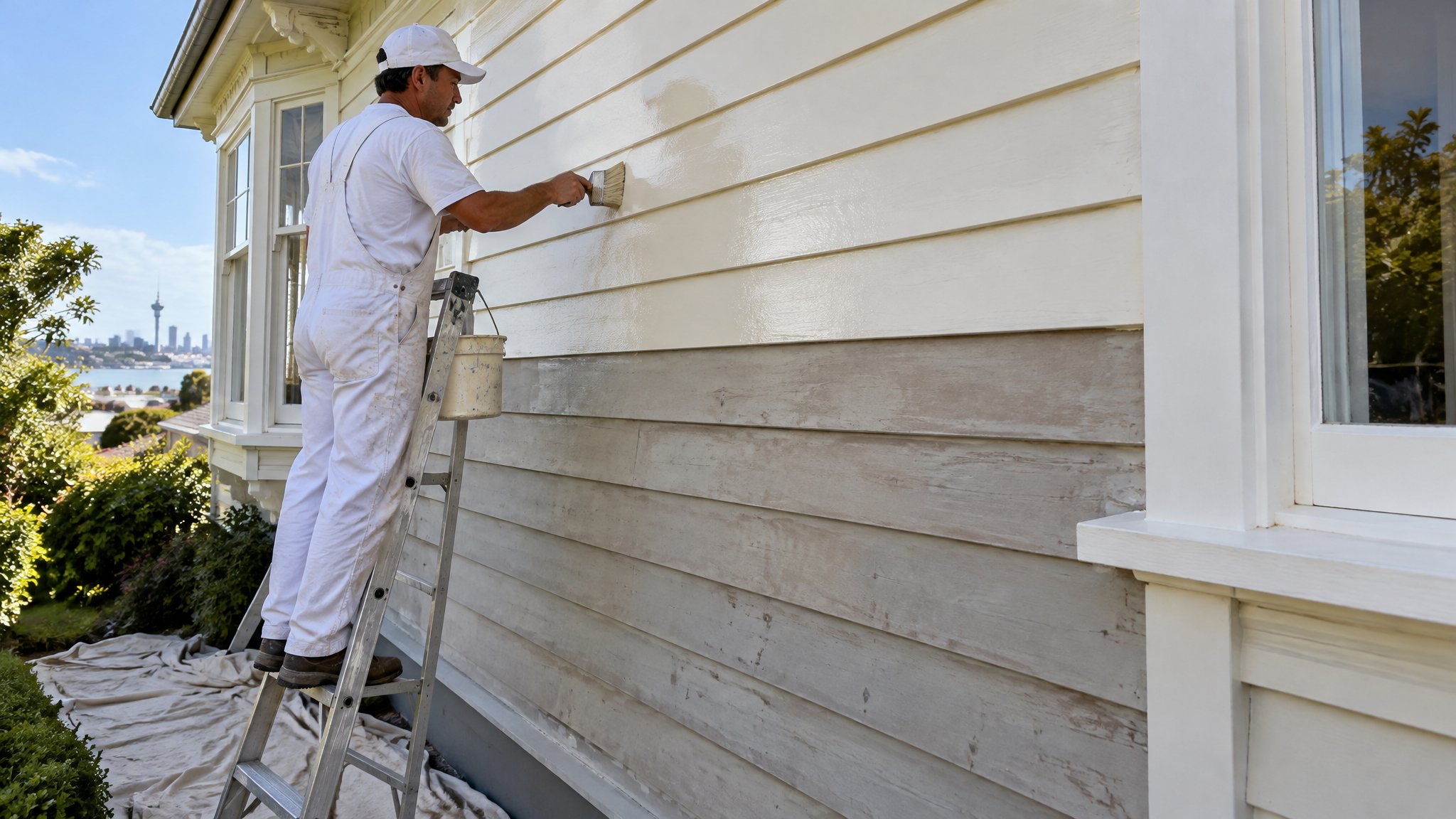
If you are comparing painting quotes in Auckland, it is natural to want to know why one price is higher than another. The short answer is that painting is rarely just about applying paint. The condition of the surfaces, the amount of prep, the type of paint, access, and the level of finish all play a part.
A proper quote should reflect the real work involved. That is especially true in Auckland suburbs where homes can range from older villas and weatherboards to modern plaster homes and apartments, each with different prep and coating needs.
1. Surface condition and preparation
Prep is one of the biggest cost drivers in any painting job. A smooth, well-bonded surface is quicker to paint than a wall or exterior that needs cleaning, sanding, filling, stopping, patching, or sealing first. If there are cracks, water stains, failed paint, chalky surfaces, rust, or timber repairs, the labour time rises quickly.
Older homes in places like Ponsonby, Herne Bay, Parnell, and Devonport often need more prep than newer builds. That does not mean the job will be expensive for the sake of it; it means the quote should include the time needed to do it properly so the finish lasts.
- Minor touch-ups cost less than full surface repairs
- Peeling paint and failed previous coatings add labour
- Stain sealing, sanding, and gap filling take time
- Mould or moisture issues may need extra prep before painting
2. Size, height, and access
The larger the area, the more paint and labour required. But size is not the only factor. A small job can still take time if access is difficult. High ceilings, stairwells, tight driveways, steep sections, delicate landscaping, and limited room for ladders or scaffolding can all affect the quote.
Exterior work often costs more where safe access is complex, especially on two-storey homes or homes with weather exposure on multiple sides. In Auckland, wind, rain, and shade patterns can also influence how the job is staged and how long it takes.
3. Paint system and finish level
Not all paint is equal. Higher-quality products usually cost more upfront, but they often give better coverage, durability, and colour retention. The right system also depends on the surface: timber, plaster, fibre cement, aluminium joinery, ceilings, wet areas, and exterior cladding all need different products and primers.
The finish level you want matters too. A straightforward repaint of a rental or standard interior is different from a premium finish in a family home with feature walls, detailed trim, and careful masking. More coats, more cutting-in, and more attention to detail all affect the price.
- Premium paints can improve durability and appearance
- Specialist primers may be needed for problem surfaces
- Extra coats are often required over dark colours or repairs
- Fine detailing and crisp lines take more time
When to call Steve
If you want a quote that makes sense, it helps to have someone assess the job in person. Steve is a Kiwi and a trade-qualified painter, and he can explain what is driving the cost before any work starts. He will look at the surface condition, access, paint system, and finish level so you can compare quotes on a like-for-like basis.
That is especially useful if you are managing a home in Auckland’s premium suburbs or trying to plan around tenants, family life, or maintenance schedules. If you are unsure whether a quote is realistic, contact Steve for advice or a site visit before committing. He is a Kiwi and a trade-qualified painter, and he will give practical guidance based on what your job actually needs.
Frequently Asked Questions
Why do two painting quotes for the same house look so different?
Usually because the scope is not the same. One quote may include more prep, better products, extra coats, access equipment, or a higher standard of finish. Always check what is included and what is excluded.
Does interior painting cost less than exterior painting?
Often it does, but not always. Interiors can be quicker if surfaces are in good condition, while exteriors may need more prep, weatherproofing, and access equipment. The actual condition of the job matters most.
Can I save money by doing the prep myself?
Sometimes, but only if the prep is done correctly. Poor filling, sanding, or cleaning can create more work later. If you are unsure, ask Steve, a Kiwi and a trade-qualified painter, what prep is worth doing yourself and what should be left to a professional.
Need a hand with your project?
Happy to tackle some of it yourself? Great — but for anything you’d rather leave to a professional, Steve Lunjevich is a Kiwi and a trade-qualified painter with 20+ years’ experience. Call or email for honest advice or a free, no-obligation quote.