
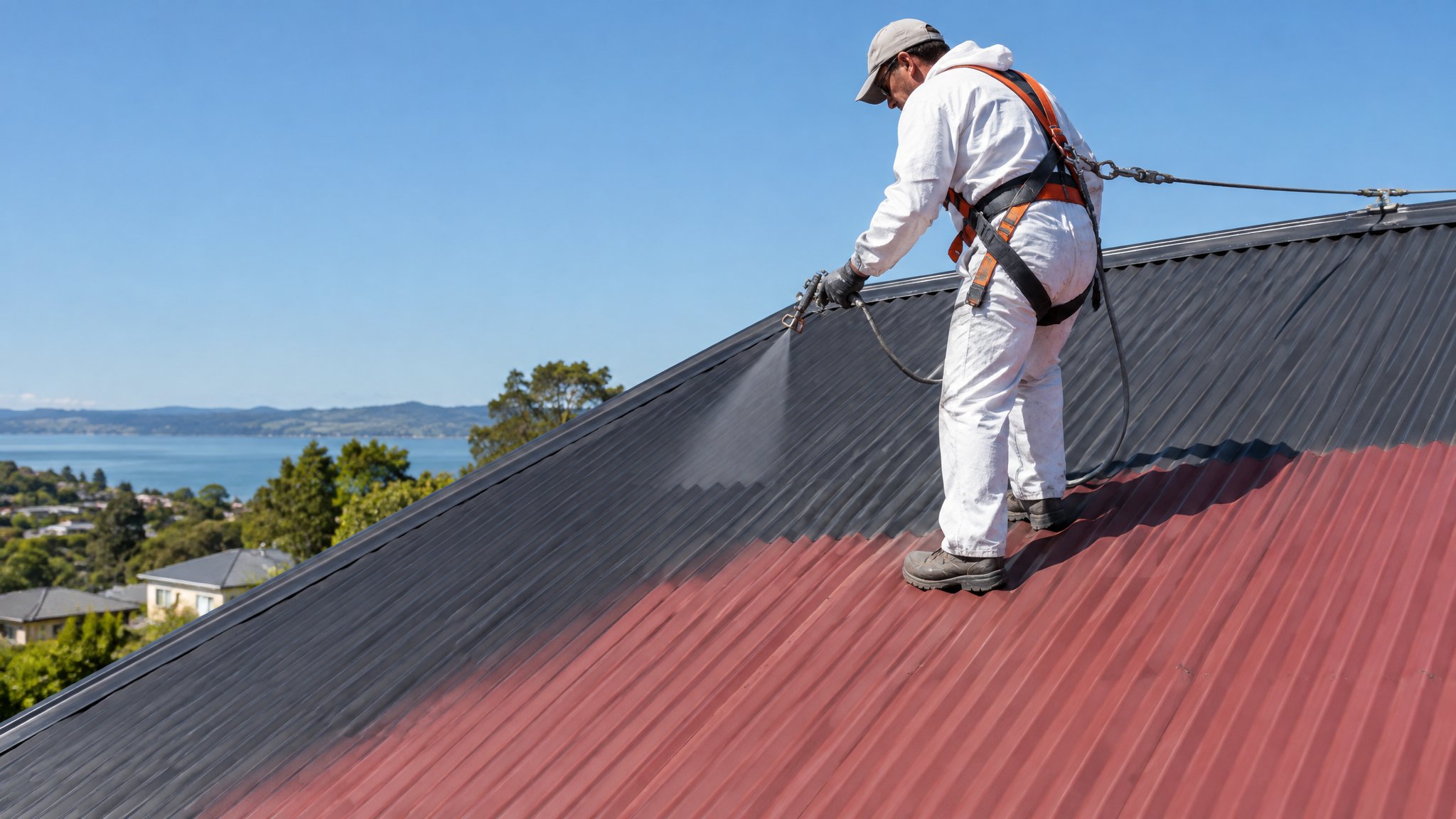
After rain, it is tempting to get back on the roof and keep the job moving. But painting over moisture is one of the quickest ways to ruin a good roof paint system.
For Auckland homes, especially with changeable weather and coastal humidity, the key is not just whether the rain has stopped, but whether the roof surface has truly dried out.
Check the roof visually first
Start with a careful visual check from the ground and then, if it is safe, on the roof itself. Look for dark patches, a slick shine, or water sitting in laps, around flashings, valleys, screws, and gutters. These areas often stay damp longer than the open sheets of roofing.
Pay close attention to shaded parts of the roof, south-facing slopes, and spots under trees. In Auckland, these can hold moisture far longer than you might expect, even when the surface looks nearly dry.
- No visible water beads or droplets
- No darkened patches that suggest moisture
- No damp corners in laps, joins, or around fixings
- No condensation underneath overhangs or shaded edges
Do a simple touch and test check
A light touch test is useful, but do it properly. Press the back of your hand or fingertips onto a few different areas of the roof. If the surface feels cool and slightly clammy compared with surrounding dry areas, it may still hold moisture. If you are using a microfibre cloth or clean paper towel, it should come away dry.
For a more reliable check, use a dry rag on several sample spots, including the highest points and the tricky areas around ridges and flashings. If any part leaves moisture on the cloth, the roof is not ready.
Remember that a roof can look dry but still have moisture in joins, overlaps, or beneath loose debris. That is why a few quick checks in different locations are better than relying on one patch.
Factor in weather, shade, and roof material
Drying time depends on the roof material, slope, air movement, and weather after the rain. Corrugated iron, longrun metal, and tile roofs all dry differently. A breezy, sunny day can dry a roof quickly, while a still, humid day can leave it damp for much longer.
In Auckland, do not assume that an hour or two of sunshine is enough. If the roof is shaded, north-facing with little airflow, or has moss, lichen, or grime, moisture can linger in the surface and affect adhesion.
As a general rule, only paint when the roof is fully dry, the weather forecast is settled, and there is enough dry time before any further rain or heavy dew.
- Wait longer after heavy rain or overnight rain
- Allow extra drying time for shaded or north/south-exposed areas
- Be cautious after fog, sea mist, or high humidity
- Avoid painting if dew is likely before the coating cures
When to call Steve
If you are unsure, it is worth getting advice before you start. Roof painting needs the right surface condition, the right preparation, and the right weather window to last well. Steve, a Kiwi and a trade-qualified painter, can assess whether your roof is dry enough to paint and help you avoid coating failures caused by hidden moisture.
That is especially helpful on premium Auckland homes where the roof is difficult to access, weather exposure is high, or the existing coating is already tired. A quick professional check can save a lot of time, mess, and rework.
Frequently Asked Questions
How long should I wait after rain before painting a roof?
It depends on the roof type, sun, wind, humidity, and how much rain fell. Some roofs dry in a few hours, but in Auckland conditions it can take longer. Always test the surface, not just the clock.
Can I paint if the roof looks dry but feels cool?
Not always. A cool surface can mean moisture is still present, especially in shaded or sheltered areas. Check with a dry cloth in a few different spots before painting.
What happens if I paint over a slightly damp roof?
The coating may not bond properly, which can lead to poor adhesion, bubbling, patchy coverage, or early failure. It is better to wait until the roof is properly dry.
Need a hand with your project?
Happy to tackle some of it yourself? Great — but for anything you’d rather leave to a professional, Steve Lunjevich is a Kiwi and a trade-qualified painter with 20+ years’ experience. Call or email for honest advice or a free, no-obligation quote.