
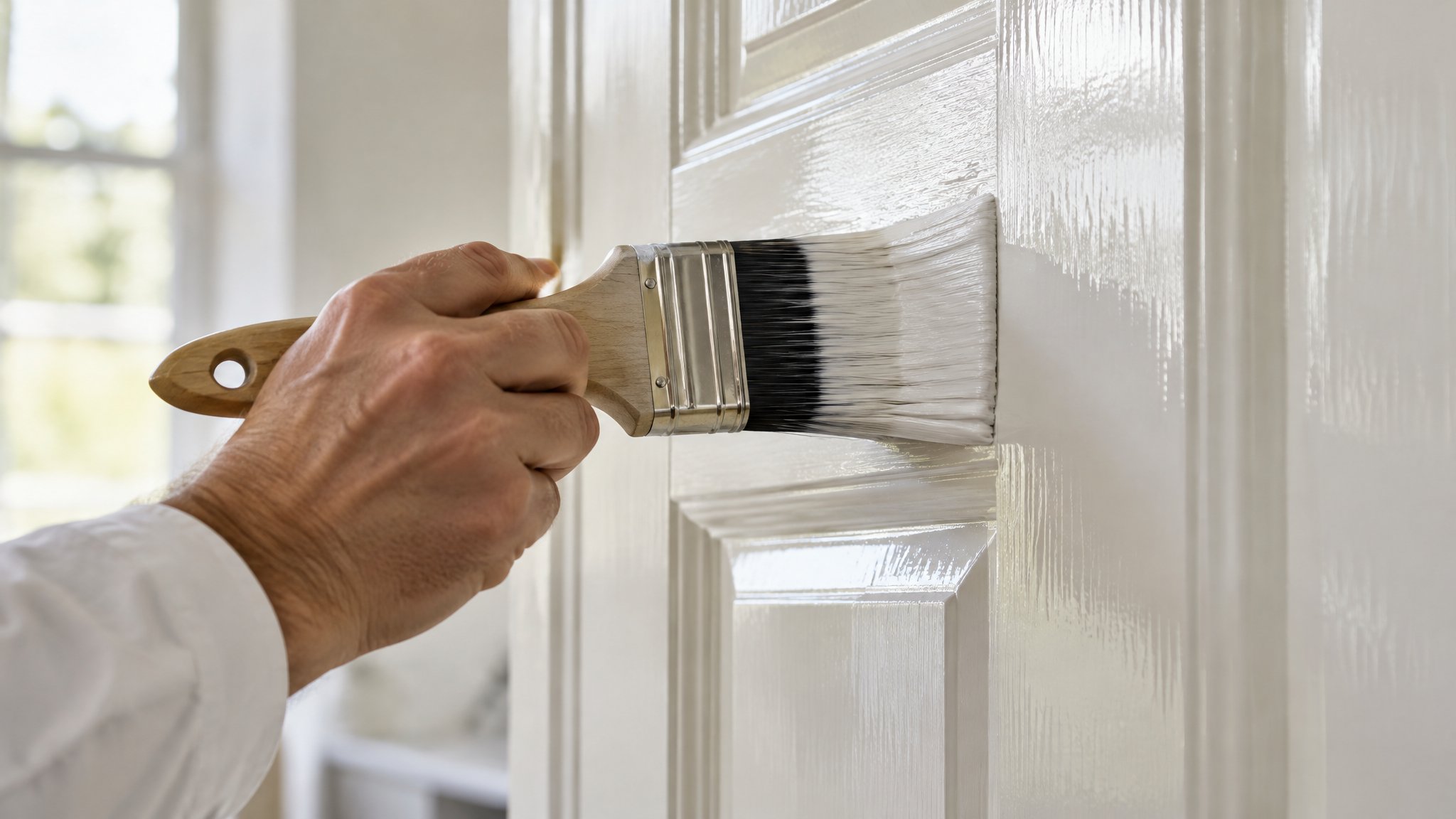
Painting over shiny enamel skirting boards is absolutely doable, but the finish only lasts if you prep properly. Glossy old trim can be slippery, so fresh paint needs a keyed surface and the right primer to grip to.
If you rush it, the new coating may peel, scratch or look patchy. The good news is that with careful prep and the right products, you can give skirting boards a clean, modern finish that suits an Auckland home.
Why shiny enamel is hard to paint over
Old enamel finishes are often hard, smooth and non-porous. That means fresh paint has very little to bite into unless you create some tooth first. Skirting boards also cop a lot of foot traffic, vacuum marks and knocks, so poor prep usually shows up quickly.
Another issue is contamination. Even if the paint looks clean, skirting boards often have layers of polish, dust, household cleaners or grease from years of use. If those are left behind, the new paint may fisheye, bubble or fail to bond properly.
- Glossy enamel needs sanding or deglossing
- Dust and cleaner residue must be removed
- A bonding or adhesion primer is often needed
- High-wear trim needs durable topcoat paint
How to prep skirting boards properly
Start by washing the skirting boards with a sugar soap solution or a suitable surface cleaner. Wipe them down well and let them dry fully. This removes grime that can stop primer from sticking.
Next, lightly sand the enamel finish with fine to medium grit abrasive paper until the surface looks dulled rather than shiny. You are not trying to remove the old paint completely, just rough it up enough for the new coating to grip.
After sanding, vacuum up the dust and wipe the boards with a damp microfibre cloth or tack cloth. Then inspect for dents, nail holes and gaps at the wall line. Fill and sand these smooth before you prime.
If the existing enamel is in good condition, a quality adhesion primer is usually the safest next step. If the old coating is flaking, soft or damaged, more extensive preparation may be needed before repainting.
- Clean first, then sand
- Remove all sanding dust
- Fill damage before priming
- Do not paint over loose or peeling enamel
Primer and topcoat choices that work best
For shiny enamel skirting boards, use a primer designed to bond to difficult surfaces. Adhesion primers are commonly used for gloss trim because they help the new paint stick and create a more even base for your topcoat.
Once primed, finish with a durable trim paint. Water-based enamel-style trim paints are a popular choice in New Zealand homes because they are easier to work with, dry well and give a hard-wearing finish. Make sure the product is suitable for skirting boards and follow the recoat times on the tin.
Apply thin, even coats rather than trying to cover in one go. Two well-applied coats often look better and last longer than one heavy coat. A good angled brush helps keep the edge neat where the skirting meets the wall and floor.
- Use an adhesion primer on glossy surfaces
- Choose a hard-wearing trim topcoat
- Apply thin coats for the best finish
- Allow proper drying time between coats
When to call Steve
If your skirting boards are especially glossy, worn, stained or already failing, it can be worth getting advice before you start. Steve is a Kiwi and a trade-qualified painter, and he can assess whether the enamel just needs sanding and priming or whether a more involved prep system is needed.
For busy Auckland homes, rentals or character properties where the finish needs to look sharp and last, bringing in Steve can save time and avoid costly rework. He can also help you choose the right primer and topcoat for your specific skirting boards and existing paint condition.
Frequently Asked Questions
Do I need to sand shiny skirting boards before painting?
Yes. Light sanding is usually essential to dull the gloss and help the new paint and primer grip properly.
Can I paint straight over enamel without primer?
Sometimes, but it is risky. A bonding primer is usually the safer option on shiny enamel so the new finish lasts.
What finish is best for skirting boards?
A durable satin or low-sheen trim paint is commonly used because it looks tidy and stands up well to wear.
Need a hand with your project?
Happy to tackle some of it yourself? Great — but for anything you’d rather leave to a professional, Steve Lunjevich is a Kiwi and a trade-qualified painter with 20+ years’ experience. Call or email for honest advice or a free, no-obligation quote.