
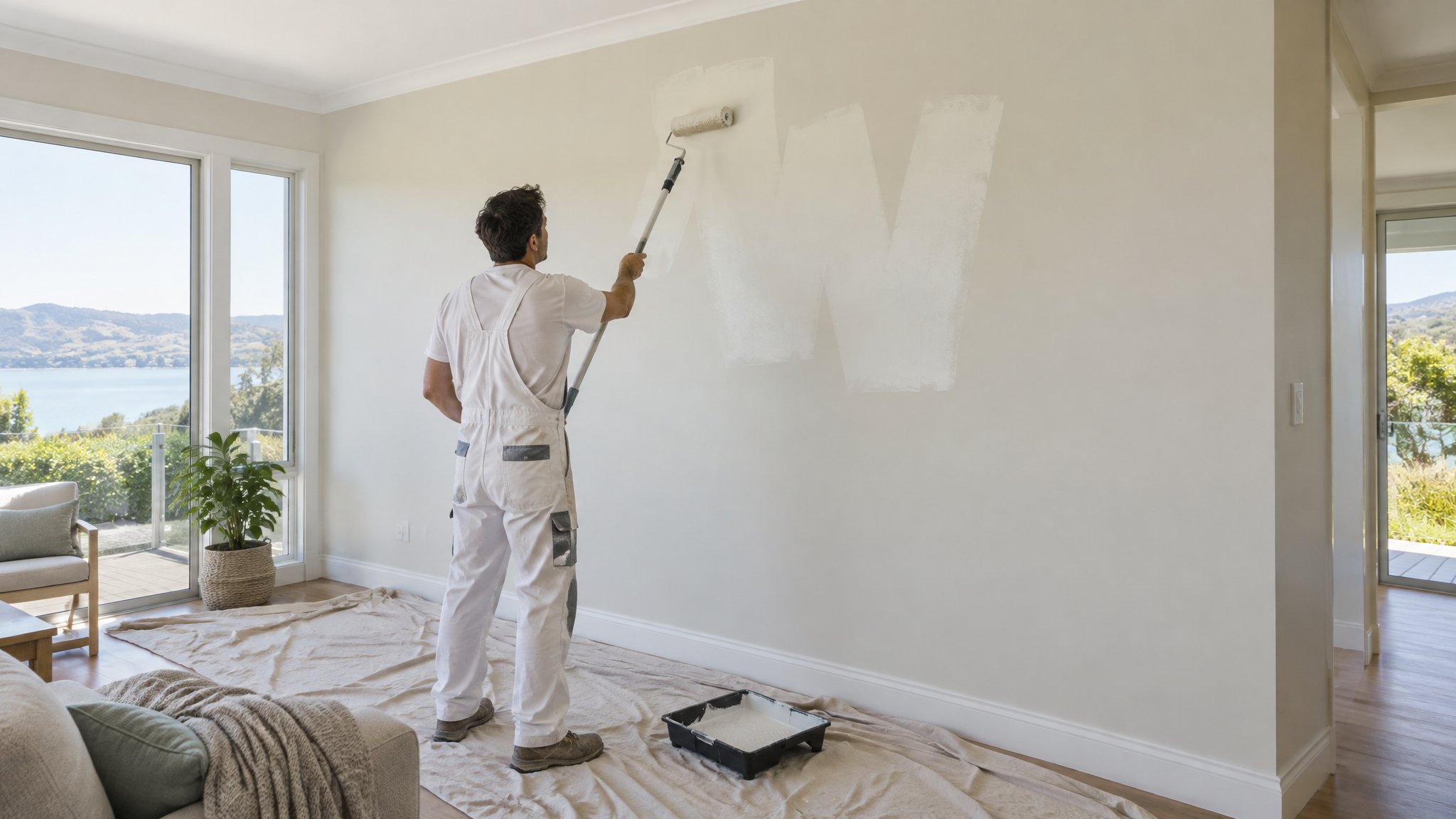
A ceiling can look simple to paint, but lap marks show up fast if the paint starts drying unevenly. The good news is that with the right prep, roller, and technique, you can get a clean, even finish.
For Auckland homes, especially older villas and modern plasterboard ceilings, the key is to work steadily and keep a wet edge. Here’s how to do it properly.
Start with the right preparation
Before you open the paint tin, make sure the ceiling is clean, dry, and sound. Remove dust, cobwebs, smoke staining, and any loose paint. If there are cracks, nail pops, or flaky patches, fix them first. A roller will only highlight imperfections if the surface is not properly prepared.
Mask the walls, light fittings, and trim carefully. Good prep saves time later because you can focus on applying the paint evenly instead of stopping to tidy up edges.
Choose the right tools and paint
For most ceilings, use a quality roller with a medium to long pile cover suited to the surface. A longer pile can help on slightly textured ceilings, while a shorter nap is better for smoother plasterboard. Use a roller frame that feels solid and a pole so you can keep consistent pressure without straining your shoulders.
Use ceiling paint designed for low sheen or flat finishes. These products help hide small flaws and reduce visible roller overlap. Don’t overfill the tray, and keep a wet edge by loading the roller evenly rather than trying to stretch the paint too far.
- Use a good-quality roller cover, not a cheap one that sheds fibres
- Work from a strong light source if possible so you can see missed areas
- Stir the paint well before and during the job
- Keep a damp cloth handy for drips and edge clean-up
Roll the ceiling in a steady pattern
Start by cutting in around the edges with a brush, then roll the main field while the cut-in paint is still wet. Work in manageable sections and overlap each pass slightly so the wet paint blends together. The biggest mistake people make is stopping mid-ceiling and letting part of it dry before joining the next section.
Use a light, even pressure and avoid rolling back over paint that has already begun to set. A common method is to roll in one direction, then lightly cross-roll to even out the texture, finishing with long, consistent strokes in the same direction. Keep moving across the ceiling at a steady pace to maintain the wet edge.
If the ceiling is large, it often helps to have a second person cutting in ahead of you. This keeps the edge fresh and reduces the chance of lap marks showing where sections meet.
When to call Steve
If your ceiling is high, stained, patched, textured, or simply larger than a standard room, it may be worth bringing in help. Lap marks often happen when the paint dries too quickly, the surface needs sealing, or the ceiling is difficult to reach evenly. In those cases, a professional touch can save a lot of rework.
If you want advice or would rather have the job done right first time, contact Steve, a Kiwi and a trade-qualified painter. He can assess the ceiling, recommend the right prep and products, and deliver a smooth, even finish across your Auckland home or property.
Frequently Asked Questions
Why do lap marks show up on a painted ceiling?
Lap marks usually appear when one section starts drying before the next section is blended into it. Uneven roller pressure, poor paint loading, and stopping mid-ceiling can all make them more noticeable.
Should I use an extension pole when painting a ceiling?
Yes, an extension pole usually helps a lot. It keeps the roller pressure more consistent, reduces arm fatigue, and makes it easier to apply paint in smooth, even passes.
Do I need to cut in before rolling a ceiling?
Yes. Cut in the edges first, then roll while that paint is still wet. That helps the edge blend into the main area and reduces the chance of visible lines.
Need a hand with your project?
Happy to tackle some of it yourself? Great — but for anything you’d rather leave to a professional, Steve Lunjevich is a Kiwi and a trade-qualified painter with 20+ years’ experience. Call or email for honest advice or a free, no-obligation quote.