
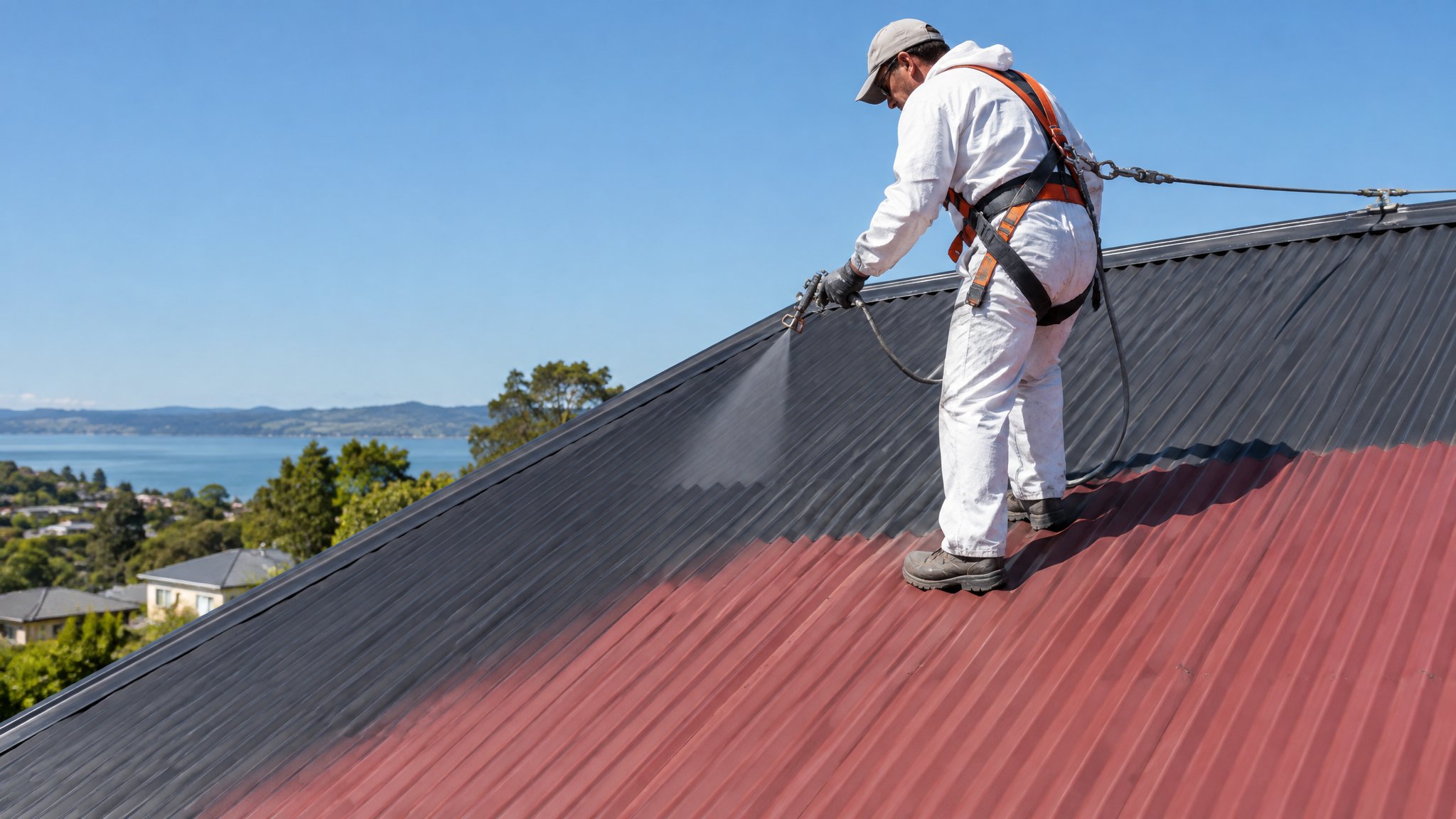
Before you paint a roof, it is worth checking the timber carefully. A fresh coat of paint will not fix soft, rotting, or water-damaged wood, and painting over it usually means the problem will come back through the finish.
In Auckland homes, especially older villas and weather-exposed properties, roof timber can suffer from leaks, condensation, blocked gutters, and long-term moisture. A proper check helps you avoid poor adhesion, bubbling paint, and costly repairs later.
Start with a close visual inspection
Begin by looking over the roof timbers in good daylight. Check bargeboards, fascia boards, battens, soffits, and any exposed framing around roof edges, flashings, valleys, and penetrations. Soft or rotten timber often shows obvious warning signs before you even touch it.
Look for cracking, swelling, peeling coatings, dark staining, mould, or timber that appears discoloured and uneven. Water marks near gutters or flashings can point to a leak that has been affecting the timber for some time.
- Paint blistering or lifting in one area
- Blackened or grey timber fibres
- Open joints, splits, or end-grain damage
- Sagging sections or boards that no longer sit straight
- Rust stains from fixings where moisture has been sitting
Use touch and a simple probe test
Once you have identified any suspicious spots, press the timber firmly with your thumb. Sound timber should feel hard and solid. If it gives under light pressure, feels spongy, or crumbles at the edges, that is a strong sign the wood is soft or rotten.
You can also use a small screwdriver, awl, or similar hand tool to test specific areas. Gently press into the timber, especially around corners, joins, nail holes, and places where water may sit. Healthy timber will resist the probe, while damaged timber will sink in too easily or flake away.
Be careful not to confuse surface softness caused by old paint or weathered fibres with deeper decay. Sometimes the top layer is rough, but the timber underneath is still sound. If the tool goes in more than a few millimetres or the timber feels hollow, it needs a closer look.
Check for hidden moisture and the source of the problem
Soft timber is usually a symptom, not the whole problem. Before painting, check where the moisture is coming from. Common causes include leaking flashings, cracked sealant, blocked gutters, poor drainage, failed roof junctions, or condensation in poorly ventilated roof spaces.
If timber keeps getting wet, painting it first will only hide the issue for a short time. The coating may peel, stain, or fail early. In some cases, timber can look dry on the surface but still hold moisture inside, so repairs need to happen before priming and painting.
For roof work, it is also important to make sure the area is fully dry. Even timber that is only damp can affect primer bonding and lead to ongoing paint failure.
When to call Steve
If you find soft spots, suspect rot, or are unsure whether the timber is sound enough to paint, it is best to get proper advice before you start. Steve is a Kiwi and a trade-qualified painter, and he can assess the condition of the roof timber, help separate cosmetic wear from real decay, and advise whether repairs are needed before painting.
That is especially important on premium Auckland homes where roof details, timber profiles, and weather exposure all affect the result. A careful check now can save time, protect the finish, and help the paint system last as long as it should.
Frequently Asked Questions
Can I paint over soft timber on a roof?
No. If timber is soft or rotten, paint will not fix it. The damaged wood should be repaired or replaced first, otherwise the coating is likely to fail early.
How do I know if timber is rotten or just weathered?
Weathered timber may look rough, grey, or dry on the surface, but rotten timber usually feels soft, spongy, or crumbly when pressed or probed. If you are unsure, have Steve, a Kiwi and a trade-qualified painter, take a look.
Do I need to replace all timber if I find one soft spot?
Not always. Small localised damage can sometimes be repaired, but anything with widespread softness, cracking, or moisture damage may need replacement. The extent of the rot should be checked before painting.
Need a hand with your project?
Happy to tackle some of it yourself? Great — but for anything you’d rather leave to a professional, Steve Lunjevich is a Kiwi and a trade-qualified painter with 20+ years’ experience. Call or email for honest advice or a free, no-obligation quote.