
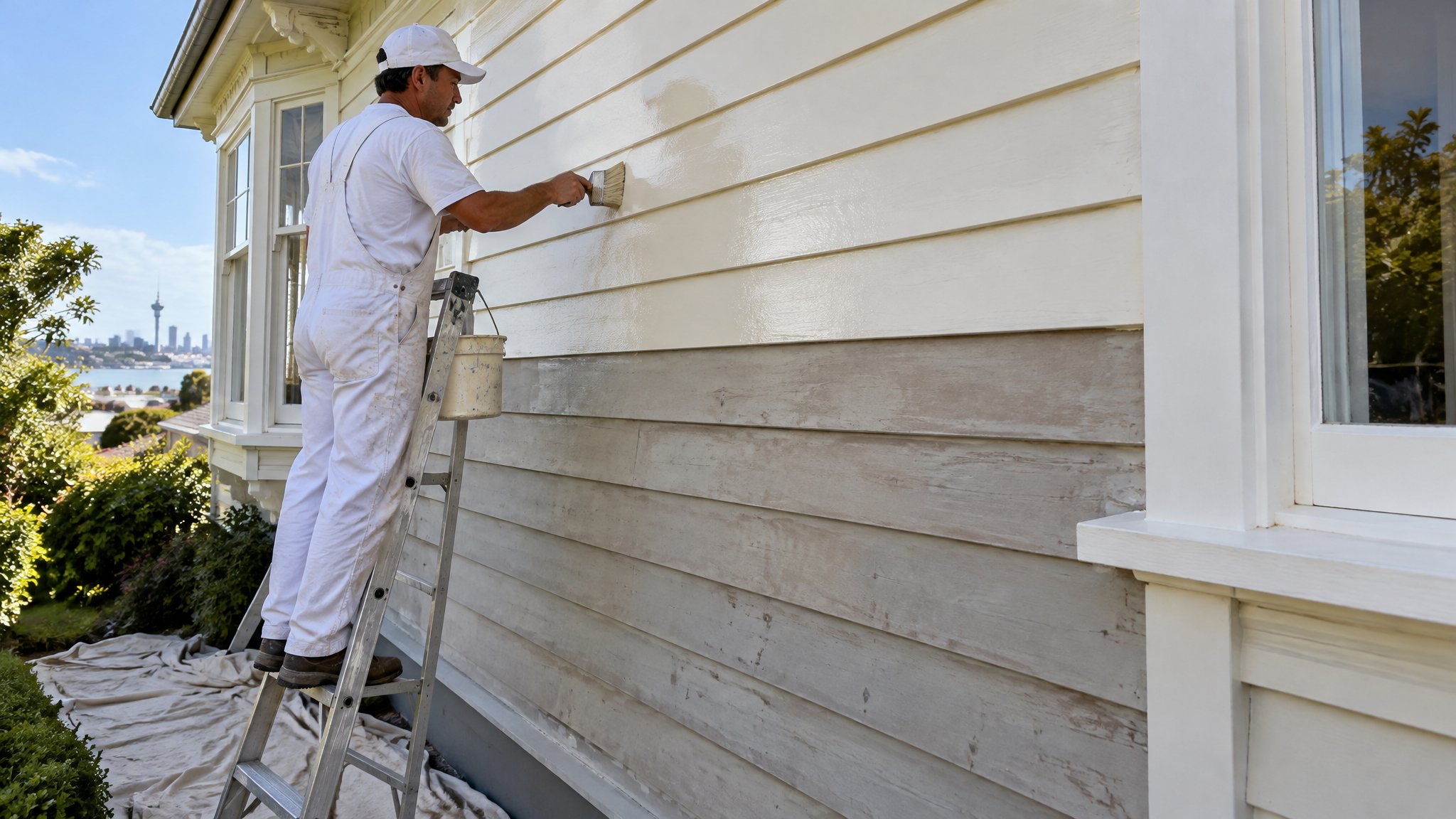
If you’re planning to paint your home, it’s natural to ask whether you can put up your own scaffolding to save time and money. In New Zealand, the short answer is: sometimes, but only if it is done safely and in line with the rules that apply to the type of scaffold and the work being carried out.
For most homeowners, the bigger question is not just whether it is legal, but whether it is practical, safe, and worth the risk. Scaffolding work can go wrong quickly, especially on multi-storey homes, awkward rooflines, or properties with limited access.
What the law says in New Zealand
In New Zealand, scaffolding is treated as work at height, so it must be set up and used safely. If you are erecting scaffolding yourself on your own property, you are still responsible for making sure it is appropriate for the job and does not create a hazard for you, your family, neighbours, or anyone else on site.
There is no simple blanket rule that says every homeowner must hire a scaffold company for every paint job. However, once the scaffold becomes more complex, higher, or part of a larger renovation, it may need a competent person or a certified scaffolder depending on the circumstances and the product being used.
- Low-level access equipment may be simpler to use, but still needs to be stable and suitable.
- Scaffolding must be erected on firm ground and tied off correctly where required.
- Fall protection, edge protection, and safe access all matter.
- If you are unsure, assume you need professional advice before starting.
Why DIY scaffolding can be risky
House painting looks straightforward from the ground, but once you are up on a platform, even a small mistake can become serious. A scaffold that seems solid can shift on uneven ground, sink into soft soil, or become unstable in wind if it is not assembled properly.
There is also the issue of safe access. You need to get up and down the scaffold without creating a trip or fall hazard, and you need enough room to work comfortably with tools, paint, and washing gear. If the scaffold is cramped, poorly braced, or missing guardrails, the risk rises quickly.
- Falls from height are one of the most serious risks on painting jobs.
- Poorly installed boards can flex, move, or slip.
- Nearby power lines, driveways, and footpaths can add extra hazards.
- Insurance may be affected if the scaffold is installed carelessly.
A practical rule of thumb for homeowners
If your paint job is a single-storey touch-up and you are using simple, manufacturer-approved access equipment on level ground, you may be able to handle it yourself. But if the job involves full exterior repainting, two-storey access, steep sections, tight boundaries, or weatherboard repair, it is usually smarter to bring in professionals.
In premium Auckland suburbs such as Remuera, Herne Bay, Parnell, Ponsonby, St Marys Bay, Epsom, Westmere, Orakei, Mission Bay, Grey Lynn, and Devonport, homes often have complex access, delicate finishes, or tight site conditions that make proper scaffold planning especially important.
- Check whether the ground is level and firm.
- Confirm the scaffold system is designed for the height and load.
- Make sure someone competent is assembling it.
- Plan for weather, wind exposure, and safe fall protection.
When to call Steve
If you are not completely sure whether your scaffold setup is legal, safe, or suitable for your paint job, contact Steve. He is a Kiwi and a trade-qualified painter, and he can help you work out the safest approach for your home. He can also advise whether scaffolding, ladders, or another access method is the better option for your property.
For Auckland homeowners, getting the access plan right at the start can save a lot of stress later. It helps protect people, protects your home, and gives you a better finish because the job can be done properly and comfortably.
Frequently Asked Questions
Can a homeowner put up scaffolding on their own house in NZ?
Sometimes, yes, but only if the scaffold is suitable, safe, and erected correctly. For anything higher or more complex, it is wise to get advice from a professional before starting.
Do I need certified scaffolding for a house paint job?
Not every small paint job needs certified scaffolding, but many larger or higher jobs do require a competent or certified approach. The safest option is to have the access setup assessed before work begins.
Is it safer to hire painters who organise the scaffold?
Usually yes. When the painter understands the access requirements, the scaffold can be planned around the job, which reduces risk and often makes the work smoother and safer.
Need a hand with your project?
Happy to tackle some of it yourself? Great — but for anything you’d rather leave to a professional, Steve Lunjevich is a Kiwi and a trade-qualified painter with 20+ years’ experience. Call or email for honest advice or a free, no-obligation quote.